Water Mist Fire Suppression System

Water Mist Fire Suppression System
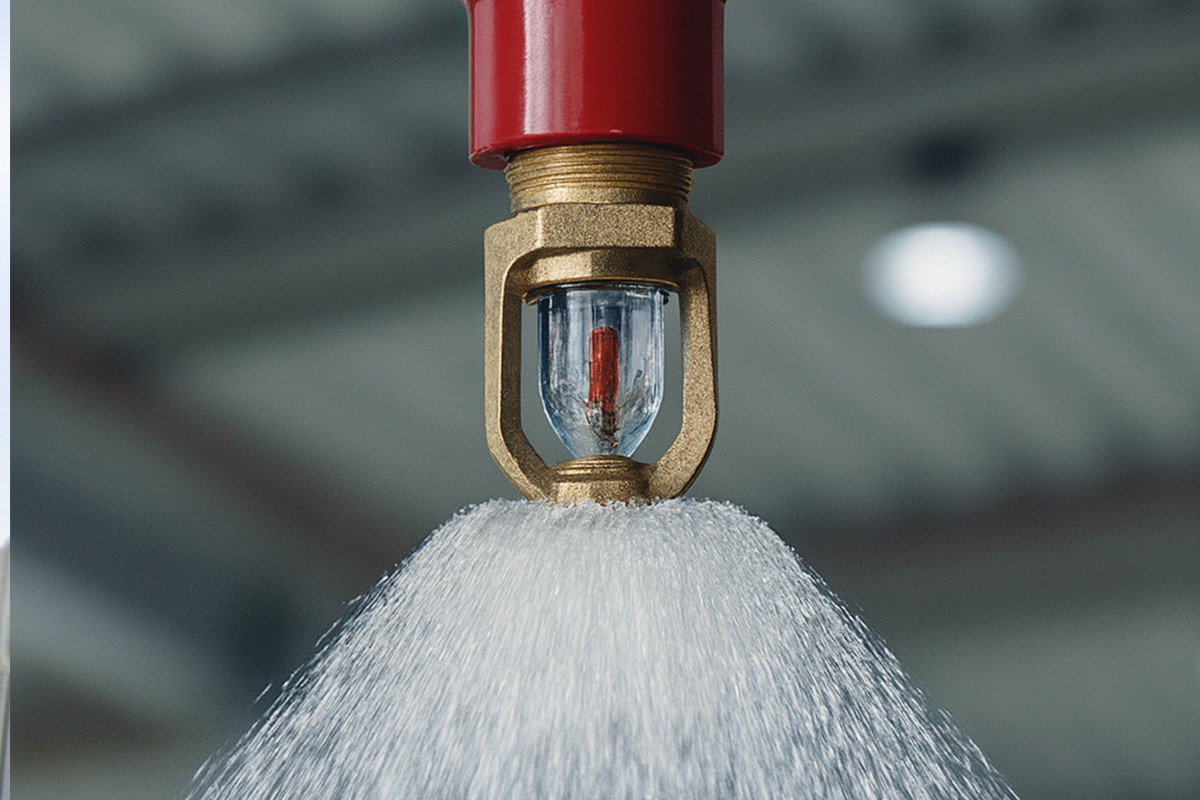
Water mist fire suppression systems use high-pressure nozzles to convert water into fine droplets, creating a mist that efficiently absorbs heat, reduces oxygen levels, and blocks radiant heat.
These systems offer both local and total flooding protection, and their design must comply with NFPA 750 or CEN TS 14972 standards.
Therefore, design, installation, testing, and maintenance must be performed by qualified specialists.
System Overview
Water mist systems control and extinguish all major fire classes through a purely physical suppression process consisting of three main effects:
-
Cooling:
Fine droplets rapidly absorb heat as they evaporate. (Specific heat of water: 4.18 kJ/kg; Latent heat: 2442 kJ/kg) -
Oxygen Displacement:
Evaporated droplets expand up to 1700 times their original volume, reducing oxygen concentration and preventing combustion. -
Radiant Heat Blocking:
The mist layer absorbs and scatters radiant heat, limiting fire spread and thermal damage.
These mechanisms allow the system to suppress flames quickly while minimizing water damage.
Key Advantages
-
Environmentally friendly – no chemicals or greenhouse gases
-
Safe for people and electronics – leaves only slight humidity
-
Consumes up to 80% less water than conventional sprinklers
-
Viable alternative to gaseous fire suppression systems
First used in marine applications in the 1950s, water mist technology is now widely implemented in industrial and commercial facilities.
System Classifications
By Pressurization Method
-
Pump Systems:
Suitable for large-scale installations with a continuous water supply. -
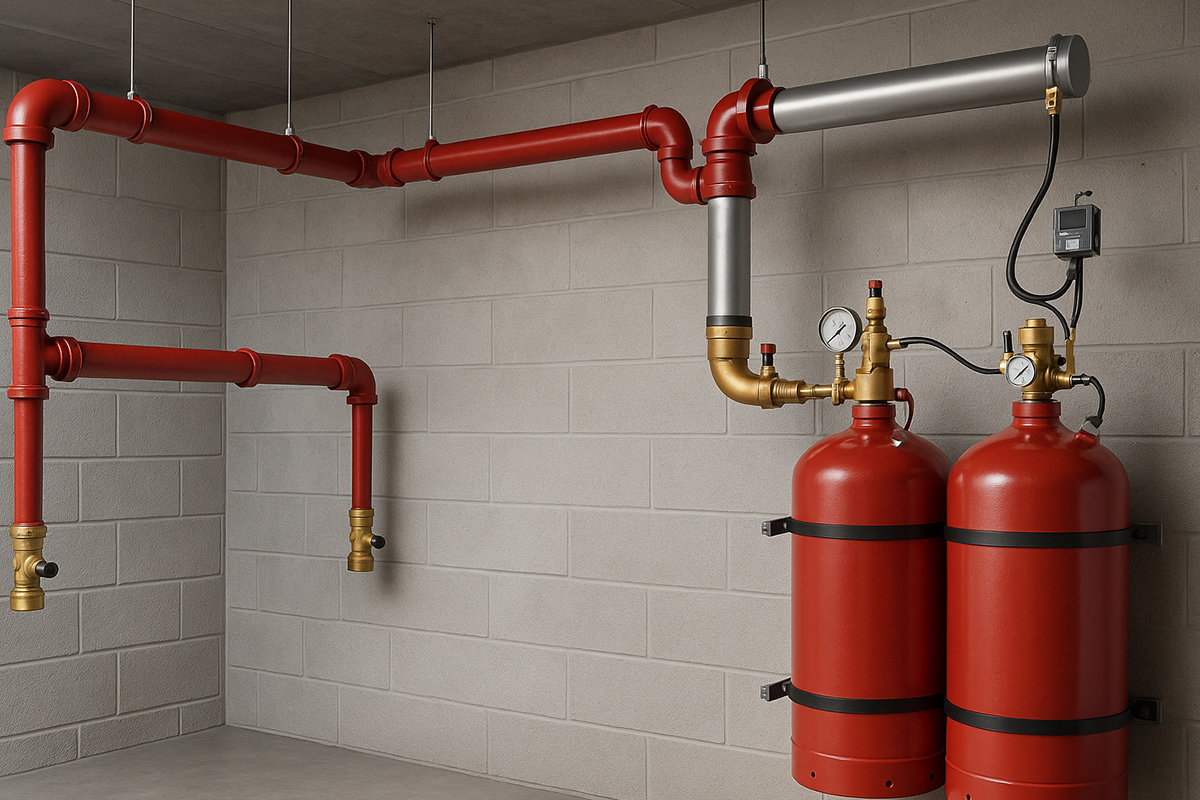
Cylinder Systems:
Designed for enclosed or limited spaces.
By Piping Type
-
Wet Pipe Systems:
Activated when the bulb on the closed nozzle ruptures. -
Dry Pipe Systems:
Operate via a separate detection mechanism. -
Deluge Systems:
Open nozzles discharge simultaneously upon detection. -
Pre-Action Systems:
Require both detection signal and nozzle activation.
Nozzle Design and Performance
Each nozzle type is defined by parameters such as coverage area, maximum ceiling height, and K-factor (flow coefficient).
All performance data must be validated through fire tests and certified by international organizations like VdS, FM, or IMO.
Applications
-
Museums and art galleries
-
Libraries and archives
-
Data centers and IT rooms
-
Communication facilities
-
Transformer and switch rooms
-
Control rooms
-
Any area protected by traditional sprinklers
Engineered by MYMEC GROUP
At MYMEC GROUP, we design and implement NFPA 750 and CEN TS 14972-compliant water mist fire suppression systems.
Our approach combines risk assessment, hydraulic design, performance verification, and field testing to ensure system reliability.
We deliver high-efficiency, eco-friendly fire protection solutions that achieve maximum safety with minimal water consumption.