Fire Detection System
Fire Detection System
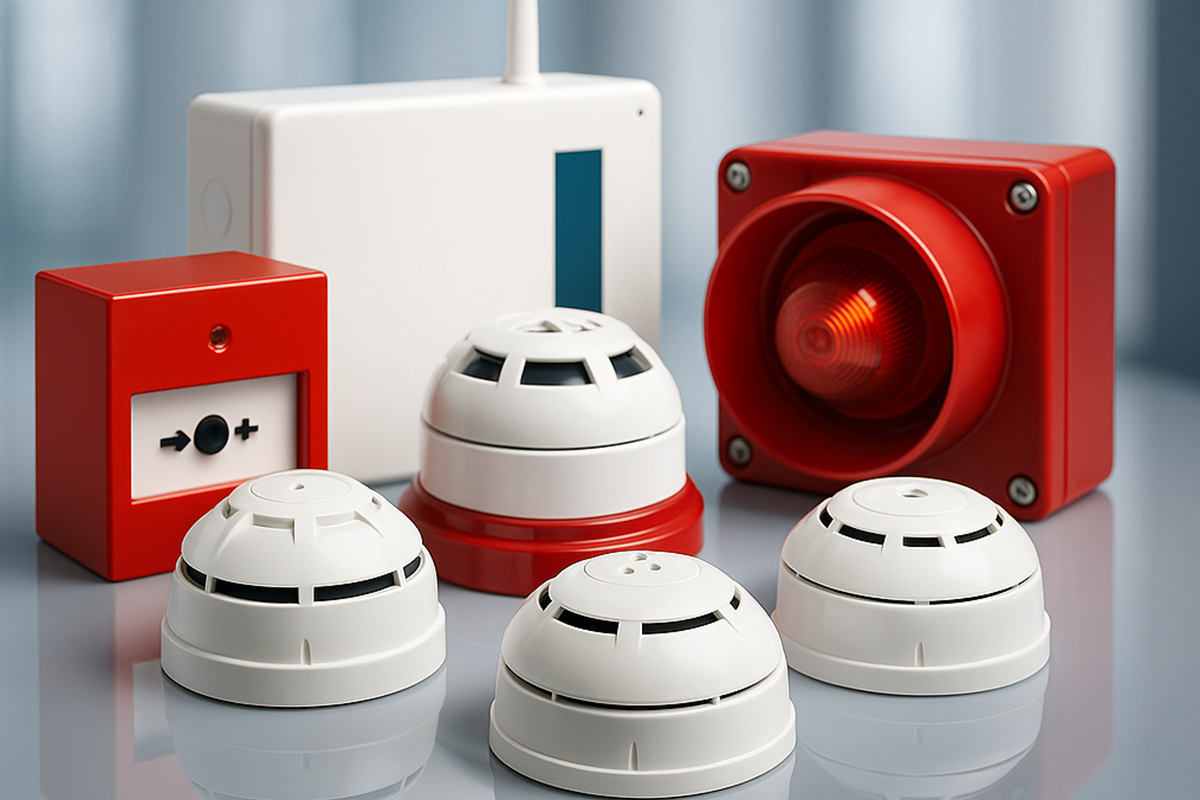
Fire detection and alarm systems combine detection, warning, control, and communication functions into one integrated safety network.
All components must be designed, manufactured, installed, and operated in compliance with EN 54 standards.
These systems can be activated manually, automatically, or via signals from fire suppression systems, ensuring a quick and coordinated emergency response.
Manual Fire Alarm Activation
Manual alarm activation is performed using fire alarm call points (break-glass units).
Their installation is mandatory in the following types of buildings:
-
Buildings with a floor area exceeding 400 m², 2–4 stories (excluding dwellings)
-
Buildings with 4 or more stories (excluding dwellings)
-
All high-rise buildings, including residential ones
Manual call points must be installed along escape routes and near exits at easily accessible and visible locations.
Automatic Fire Detection
Automatic fire detectors are required in buildings exceeding specified height or area thresholds.
When smoke detection is inadequate, alternative sensors should be used, such as:
-
Fixed temperature detectors
-
Rate-of-rise heat detectors
-
Flame detectors
-
Gas or optical particle sensors
The detector type should correspond to the primary combustion product of the potential fire:
-
For cable fires, use smoke detectors.
-
For solvent fires, use flame detectors.
Sensitivity levels must be configured according to environmental risk and temperature variations.
Detector Placement
All detectors must be installed according to EN 54-14 guidelines.
It is unnecessary to install detectors in inaccessible voids, non-combustible ducts, or enclosed spaces without fire risk.
All sensors should be positioned for easy access during maintenance and testing.
Integration with Suppression Systems
If automatic or manual extinguishing systems (gas, dry chemical, etc.) are present, their activation signals must be integrated into the fire alarm system.
This is achieved by connecting contact outputs from suppression panels to the fire alarm control panel, allowing synchronized system response and notification.
Alarm and Notification
Upon activation, the system must:
-
Trigger audible and visual alarms,
-
Display alarm information on the main and repeater panels,
-
Integrate with public address or voice evacuation systems,
-
Notify emergency teams and fire services via direct lines or communication links (e.g., GSM, IP, or radio).
Engineered by MYMEC GROUP
At MYMEC GROUP, we design and implement EN 54-compliant fire detection, alarm, and control systems for all types of buildings.
Each system is engineered based on:
-
Comprehensive risk assessment,
-
Appropriate detector selection,
-
Wiring and zoning layout,
-
Integration with suppression and evacuation systems.
Our goal is to provide intelligent, reliable, and fully integrated fire safety solutions that ensure early detection and safe evacuation in any environment.