Inert Gas Fire Suppression System

Inert Gas Fire Suppression System
Inergen Fire Suppression Systems use naturally occurring inert gases to extinguish fires safely and cleanly.
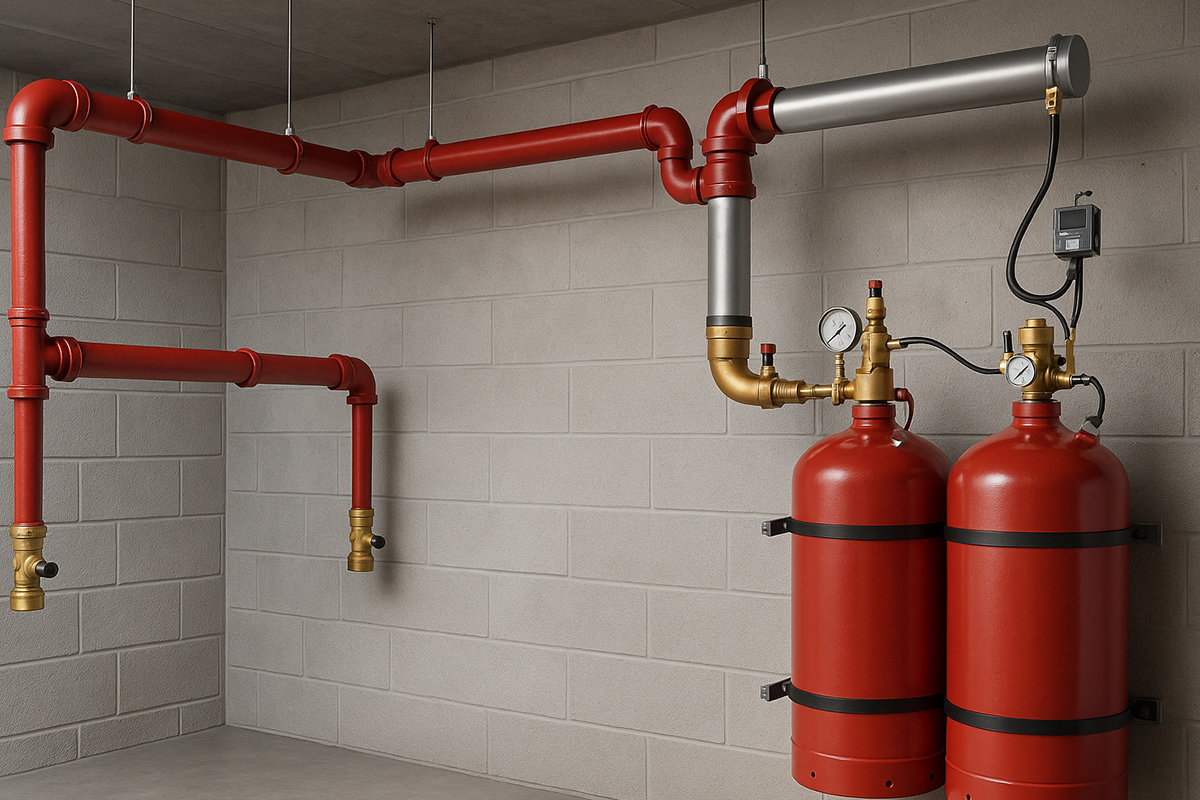
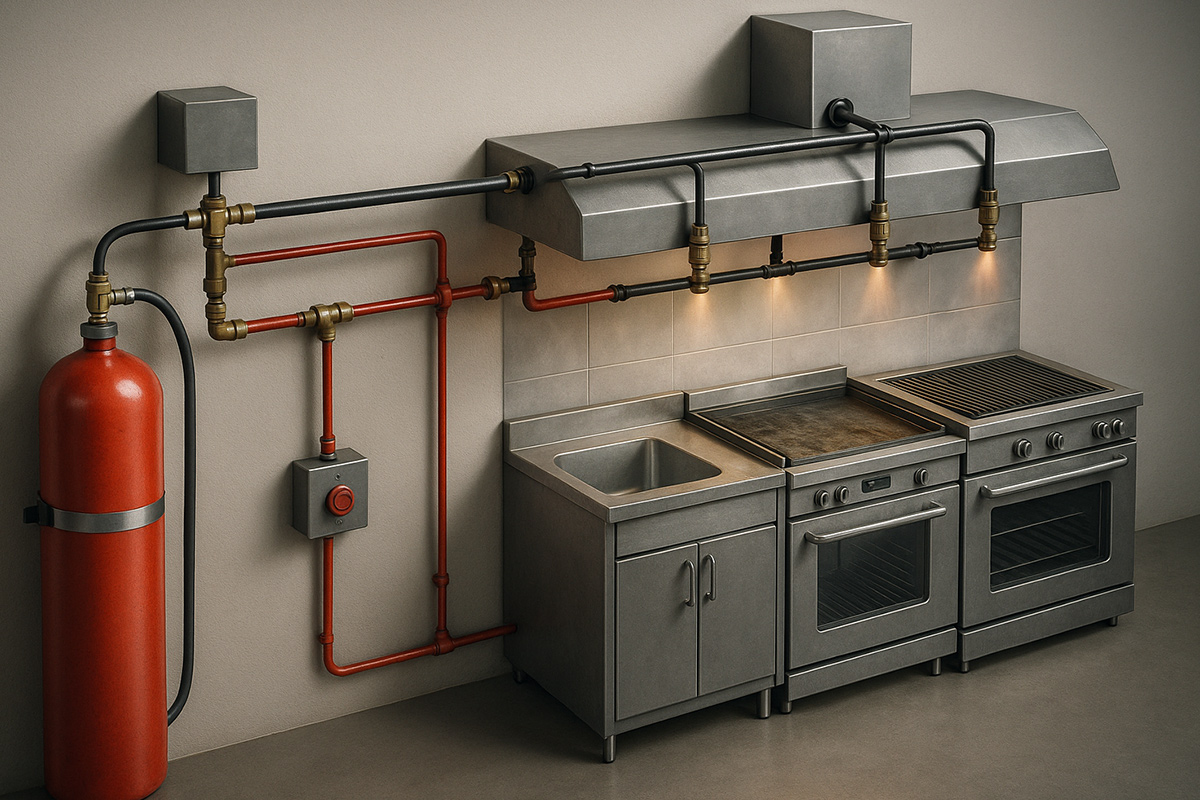
These systems rely on a fixed nozzle network for gas distribution and must be designed in accordance with EN 15004-7, 8, 9, and 10.
Therefore, all design, installation, testing, maintenance, and modifications should be performed by qualified professionals.
Inergen systems effectively protect all major fire classes (A, B, C) and provide clean, residue-free, and people-safe fire suppression.
Natural Gas Properties
The gases used in Inergen systems are 100% natural atmospheric components, meaning:
-
Zero ozone depletion potential (ODP = 0)
-
Negligible global warming potential (GWP ≈ 0)
-
No atmospheric lifetime or chemical reaction
The system works by reducing the oxygen concentration to a level that suppresses fire but remains safe for humans.
Normal air contains 21% oxygen; Inergen systems lower this to 12–15%, sufficient to extinguish the fire while allowing human survival.
Applications
Inergen systems are ideal for spaces where valuable, sensitive, or irreplaceable materials are stored:
-
Manuscript and special collections libraries
-
Public libraries and archives
-
Data centers and IT rooms
-
Communication facilities
-
Museums and heritage storage
-
Low and medium voltage electrical rooms
-
Control rooms and test laboratories
These systems ensure asset preservation and operational continuity.
System Design
Design begins with defining the fire hazard classification.
According to EN 15004-7/8/9/10, there are three hazard categories:
-
Class B: Flammable liquids
-
Class A: Surface fires (solids)
-
High-Hazard Class A: Rapidly developing solid fires
The gas concentration is calculated using minimum design values for each hazard class.
All calculations are validated using hydraulic modeling software.
Gas Types Used
-
IG-01: 100% Argon
-
IG-100: 100% Nitrogen
-
IG-55: 50% Argon + 50% Nitrogen (NitroArgon)
-
IG-541: 40% Argon + 52% Nitrogen + 8% Carbon Dioxide (Inergen Mix)
All gases are non-flammable, chemically inert, and leave no residue.
Physiological Effects
Inert gases are non-toxic; however, reduced oxygen can cause temporary physiological effects.
Design concentrations are determined to remain within safe limits:
-
NOAEL: No observed adverse effects
-
LOAEL: Lowest observed level with mild effects
MYMEC GROUP ensures all system designs remain within NOAEL safety thresholds for occupied areas.
Installation Guidelines
-
Gas quantity must be calculated per EN 15004 standards.
-
Piping networks must be verified through hydraulic calculations.
-
Use SCH40–80 seamless steel pipes and 3000 lb forged fittings.
-
Installation must be carried out by certified technicians.
-
Conduct nitrogen pressure and leak testing of the piping system.
-
The protected enclosure must be airtight with sealed penetrations and automatic dampers.
-
Gas should remain within the room for at least 10 minutes, verified via a Door Fan Integrity Test.
Engineered by MYMEC GROUP
At MYMEC GROUP, we engineer Inergen systems in full compliance with EN 15004 and NFPA 2001 standards.
Each project includes detailed risk assessments, gas flow modeling, room integrity tests, and commissioning.
Our focus is on delivering sustainable, environmentally safe, and highly reliable fire protection for critical facilities.
Other Gas Suppression Systems
-
FM200 Gas Fire Suppression System
-
Novec1230 Gas Fire Suppression System
-
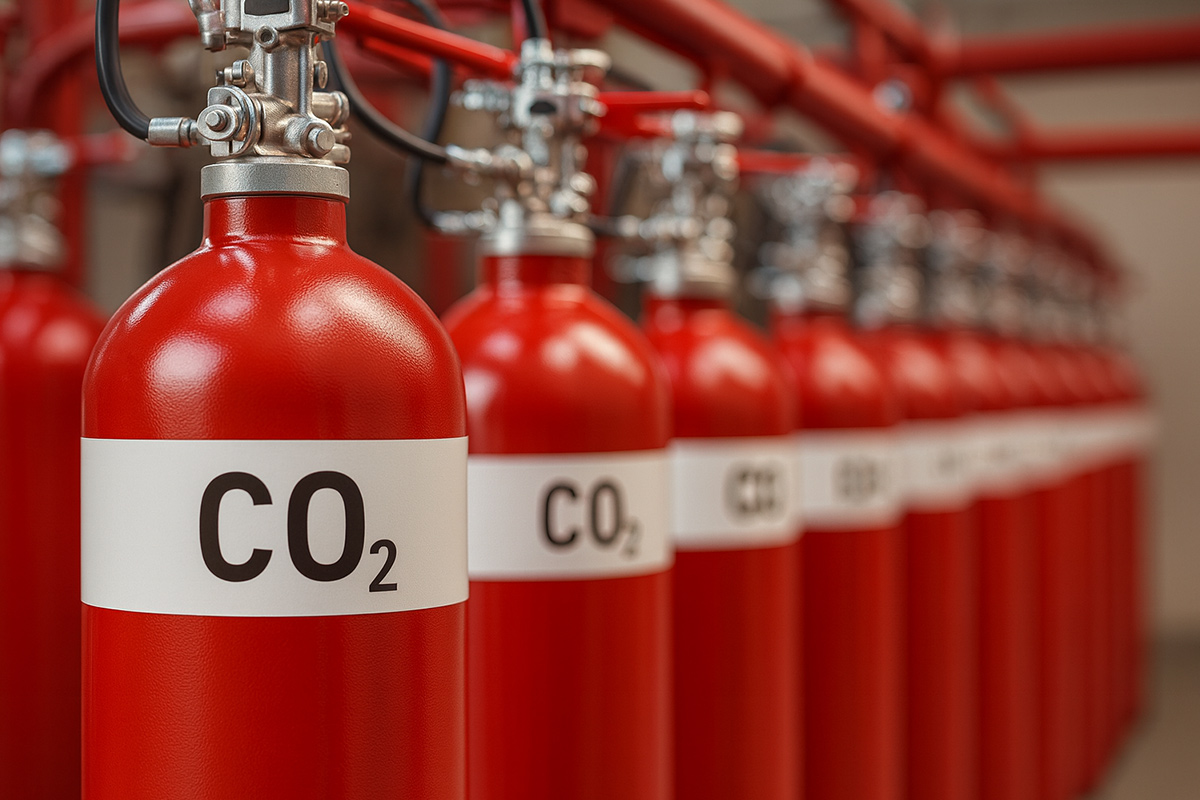
CO₂ (Carbon Dioxide) Fire Suppression System