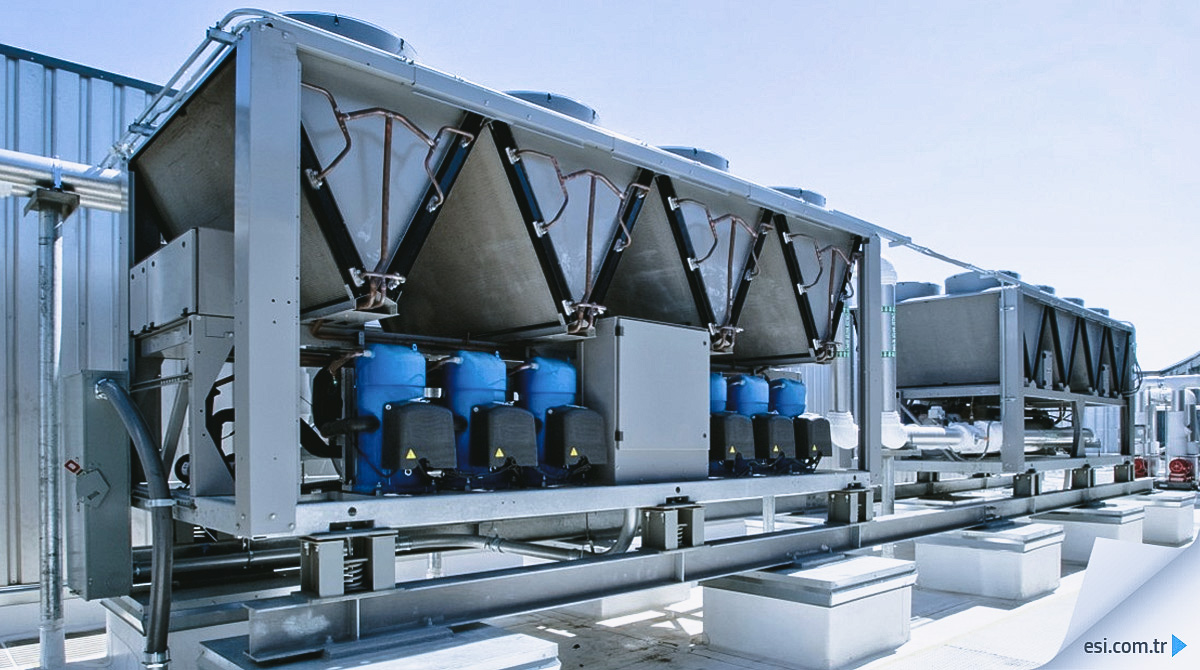
Radiant Heater
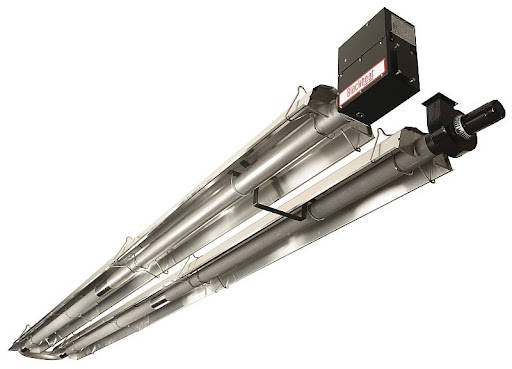
Radiant Heater
Radiant heating systems operate on the same principle as the sun warming the Earth.
They emit infrared radiant energy, which is absorbed by objects and surfaces rather than the surrounding air,
providing fast, efficient, and targeted heating.
Since radiant heat does not rely on air movement, it minimizes heat loss and performs exceptionally well
in environments with high ceilings or frequent air exchange, such as industrial halls, workshops, or warehouses.
Working Principle
A radiant heating system consists of key components: burner, radiant tube, reflector, and vacuum fan.
The gas is ignited in the burner and circulated through the radiant tube by the fan.
As the tube surface heats up to around 300°C, it emits infrared radiation, which is directed into the area by the reflector.
When the radiation strikes objects or people, it converts into heat energy,
warming the surroundings efficiently and evenly — independent of air movement.
Advantages of Radiant Heating
-
Minimizes heat loss even when doors or windows are open
-
Provides high energy efficiency with direct radiant transfer
-
Offers lower operational costs in high-ceiling buildings
-
Allows for zonal temperature control across different areas
-
Heats up quickly, providing instant thermal comfort
-
Hygienic operation with minimal air and dust circulation
-
Low maintenance requirements and long service life
Types of Radiant Heaters
High / Medium Intensity Radiant Heaters
Operate with surface temperatures above 815°C and are ideal for rapid heating.
Subcategories include:
Heated Surface Models:
Reach surface temperatures near 1000°C and use quartz lamps or resistive tubes to emit radiation.
Commonly used for outdoor or localized heating.
Flame Radiant Models:
Generate radiation directly from the flame burning over a perforated ceramic surface.
Suitable for large open areas requiring focused heat zones.
Low Intensity Radiant Heaters
Feature surface temperatures between 260°C and 815°C.
In these systems, gas is burned by the burner, circulated through tubes via a fan,
and heat is radiated through reflectors.
These models are the most widely used due to their quiet operation, balanced heat distribution, and fuel efficiency.
Applications
Radiant heating systems are ideal for factories, warehouses, hangars, shopping centers, restaurants, cafes, hospitals, gyms, and classrooms.
Compared to traditional forced-air systems, radiant systems provide up to 30% energy savings
and maintain a stable thermal balance throughout the area.
Engineered by MYMEC GROUP
MYMEC GROUP designs and installs EN 416-1-certified radiant heating systems,
covering thermal zoning, reflector positioning, tube routing, and energy optimization.
Our engineering approach ensures maximum efficiency and comfort
for large-scale or high-ceiling environments with minimal energy consumption.